
Read the Label
How to Compare Unit Prices When the Pack Sizes Differ
Make package sizes comparable, then choose the amount your kitchen will use.
Read the guideA shelf label and a package date can answer useful questions when you read them in context. Start with the detail you are trying to compare.
Make package sizes comparable, then choose the amount your kitchen will use.
Read the guide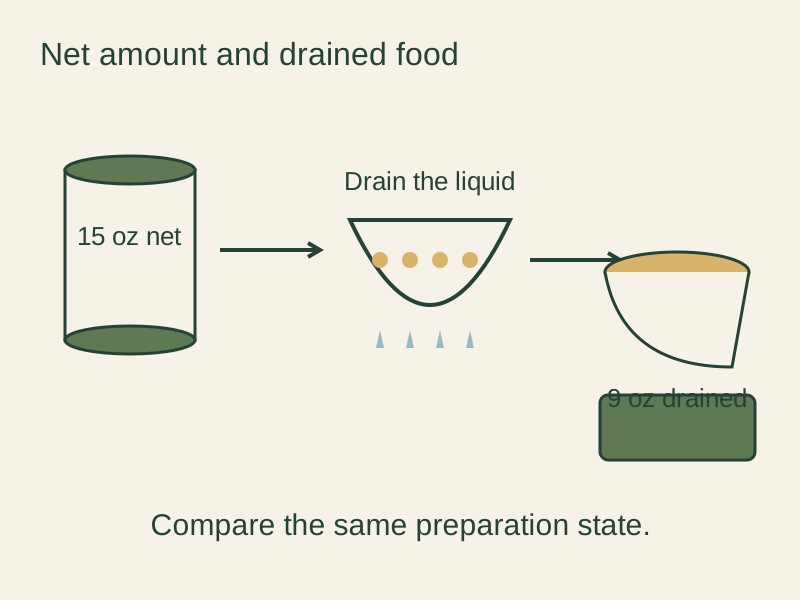
A can can tell you how much food you are buying without telling you how much will remain in your colander. Start by asking whether your recipe uses everything inside, just the solids, or some of the packing liquid too.
Read the guide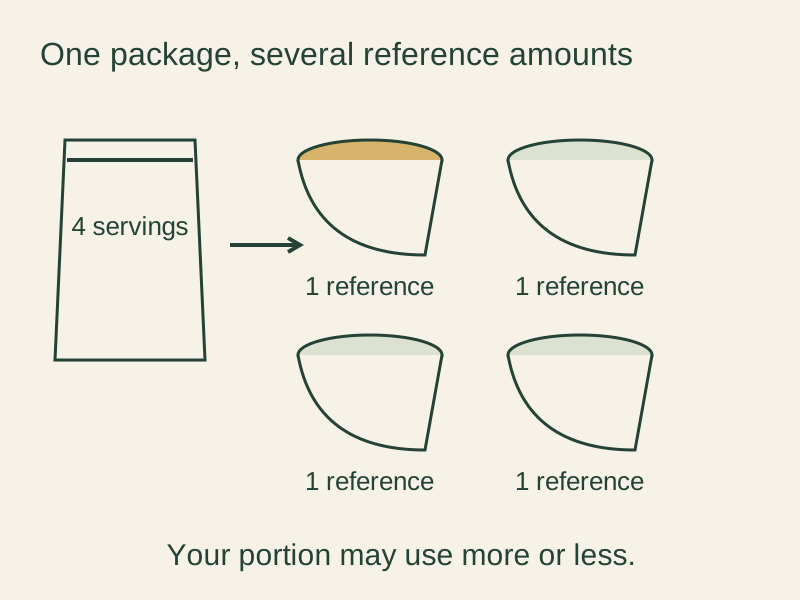
The serving size on a label and the amount in a package answer different questions. One gives you the reference amount for reading nutrition information, while the other helps you work out what you are buying and how many meals it can cover.
Read the guide
Read the date phrase, the storage directions, and what changes after opening.
Read the guide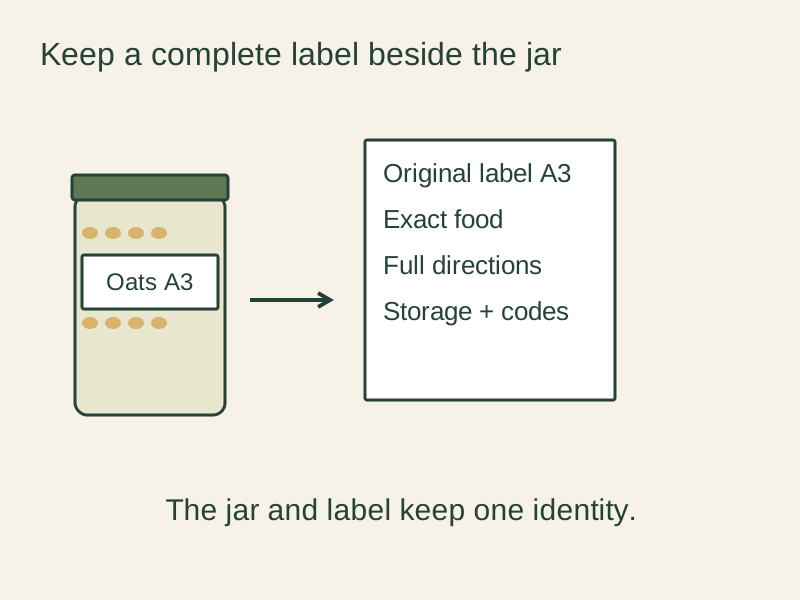
A matching row of pantry jars is useful only if you can still identify what is inside. Before you decant a food, decide where its complete directions and original identification will live.
Read the guide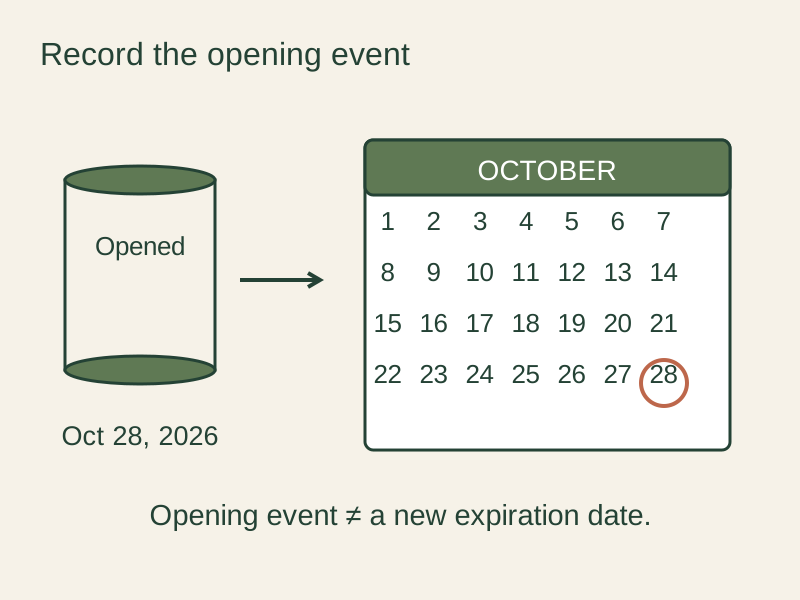
An opening date is a record of an event. It tells you when you broke the seal, which can help you apply the food's actual handling directions later.
Read the guide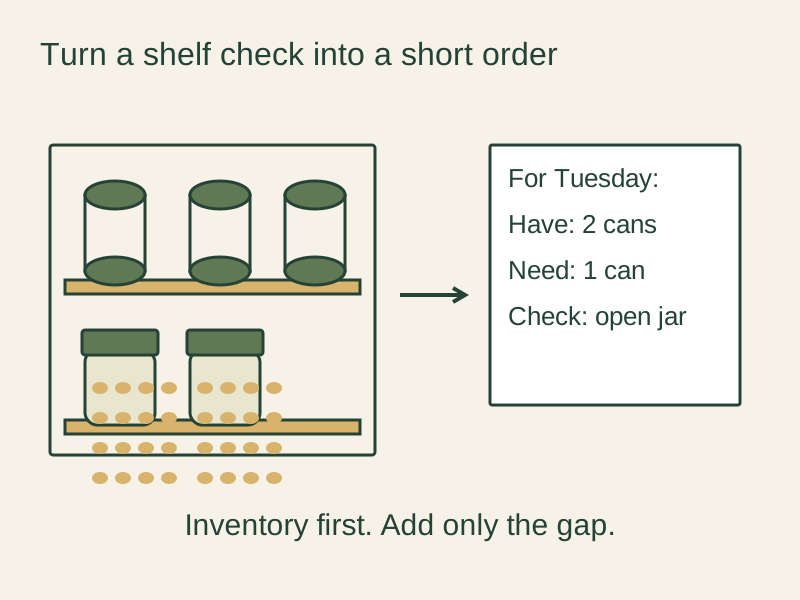
A pantry audit does not need to become a whole-house organizing project. For your next grocery order, you mainly need to know which usable ingredients you already have and which planned meals still need something.
Read the guide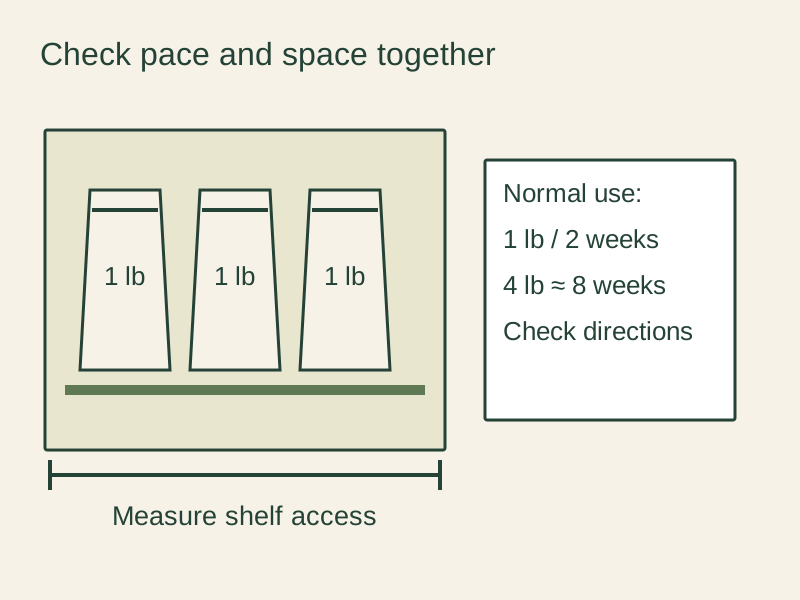
A bulk package can be useful when it matches food you already use at a steady rate. Start with that routine before comparing the price on the biggest bag or case.
Read the guide
A flour's protein information is useful when you know exactly what the number describes. Start with the bag and the maker's page for that specific flour, rather than an online chart that assigns every brand the same figure.
Read the guide
A small yeast packet and a larger jar can both be practical, depending on how often you bake and how much each recipe needs. Start by counting real batches rather than assuming a larger container is automatically the better purchase.
Read the guide
Rotating open dry goods works best when the next portion remains connected to the right label. The goal is to use an identified product in a sensible order, rather than repeatedly filling a jar until nobody knows what is inside.
Read the guide
Dry-milk packages can contain different amounts of powder and supply different mixing directions. To compare what they will give you for liquid-milk recipes, use a verified prepared yield rather than assuming equal powder weights make equal amounts of milk.
Read the guide
If you move dry milk into a pantry container, keep more than the words milk powder on the front. The exact product, mixing directions, dry-storage instructions, and useful package information need to remain connected to the contents.
Read the guide
An olive-oil label can tell you several different things at once. Grade describes a product category, origin identifies sourcing information, and the package tells you how much oil you are buying and how it is protected or dispensed.
Read the guide
The right pantry package size starts with the meals you realistically expect to make. Count the food those recipes need, check what you already have, and then choose an amount that fills the actual gap.
Read the guide