Pantry Staples
All-Purpose vs. Bread Flour: Match the Flour to the Job
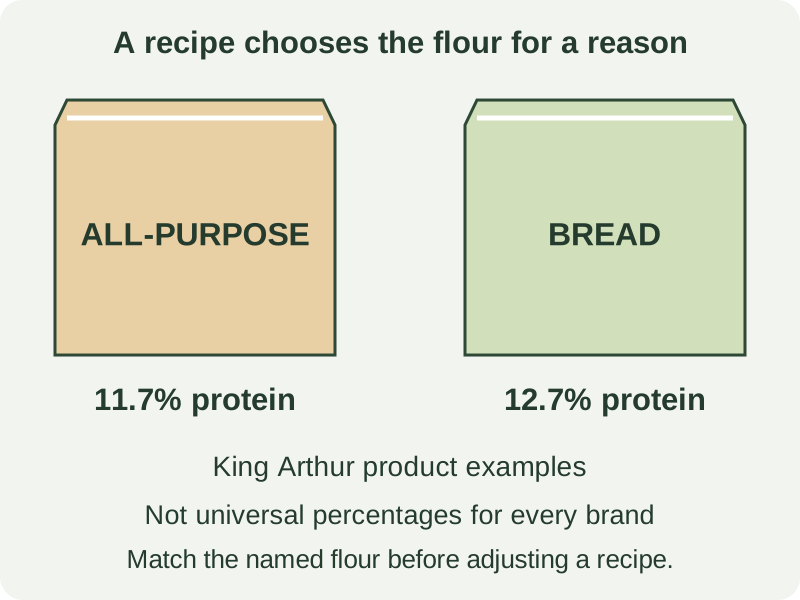
Match the flour to the recipe before changing the bag or the liquid.
Read the guideBefore substituting an ingredient, look at the job it does in the recipe. These guides help you choose a useful starting form.
Match the flour to the recipe before changing the bag or the liquid.
Read the guide
Bleached and unbleached describe how a flour has been treated, not the complete job it is designed to do. Start with the flour your recipe names, then check the treatment among the details on that exact bag.
Read the guide
A flour-storage plan begins with the exact product, not a universal pantry deadline. Read the bag's storage directions and keep its flour type, printed date wording, and identifying information available after opening.
Read the guide
Instant yeast and active dry yeast are both ingredients for yeast-raised doughs, but the directions on the exact product still matter. Start with the yeast your recipe asks for and read how that package says to use it.
Read the guide
A bread machine's yeast instructions belong to a particular machine, recipe, and program. Find those three details before deciding whether a yeast in your pantry is the right match.
Read the guide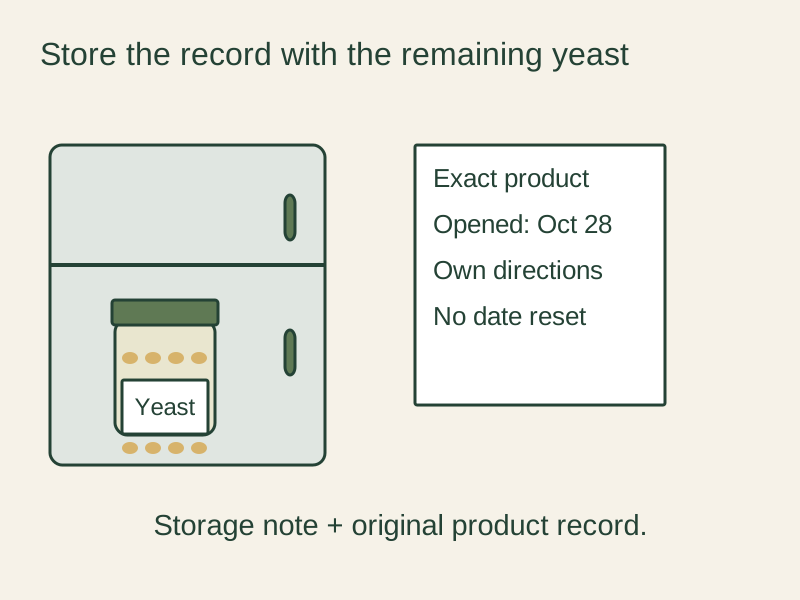
Yeast storage is easiest to manage when you can identify the exact product and find its instructions without searching. Keep the original package or a complete, clearly matched label record with the food.
Read the guide
Rolled, quick, and steel-cut oats can all belong in a pantry, but they do not give every recipe the same starting point. Decide whether you need a breakfast texture, a particular cooking method, or the exact oat specified for baking.
Read the guide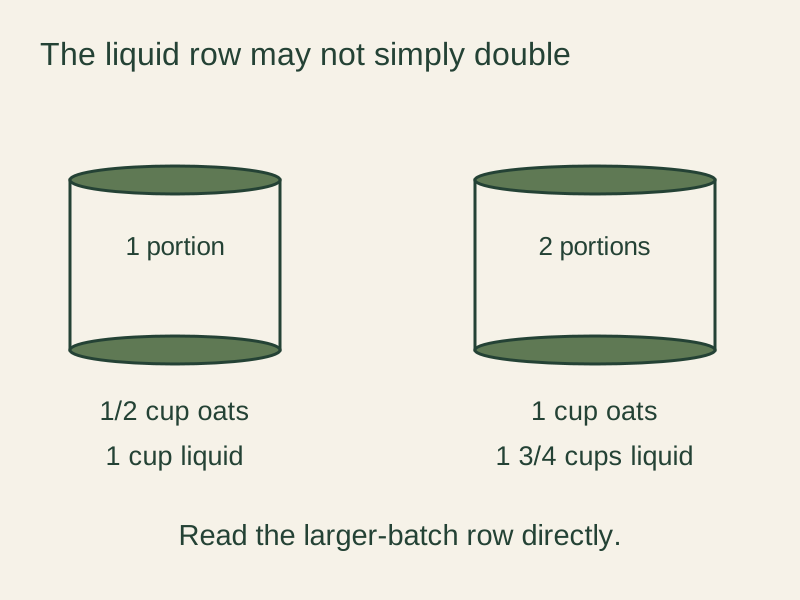
When you make oatmeal for more people, begin with the package's directions for that batch size. Do not assume every field in the single-serving method should be multiplied by the same number.
Read the guide
The most useful breakfast shelf helps you find the right food, read its directions, and put it away again. Start with those actions rather than a goal to make every container look identical.
Read the guide
A useful pantry breakfast list is a short plan for real mornings. Begin with the foods your household actually prepares, then identify the shelf-stable ingredients those meals require.
Read the guide
Canned and dry chickpeas start at different points in the cooking process. Choose between them by working backward from the meal, including preparation time and what you will do with the remaining amount.
Read the guide
Before comparing canned beans by drained yield, read what your recipe uses. A salad that calls for drained beans needs a different quantity comparison from a soup that uses the whole contents.
Read the guide
An unopened shelf-stable can and its opened contents are different storage situations. Before you use the beans, find the exact package's after-opening directions and plan what will happen to the portion you do not need.
Read the guide
A practical beans-and-grains plan starts with familiar meals and the actual time you have to cook. Choose a small number of dishes your household wants to eat, then connect the pantry ingredients to those dishes.
Read the guide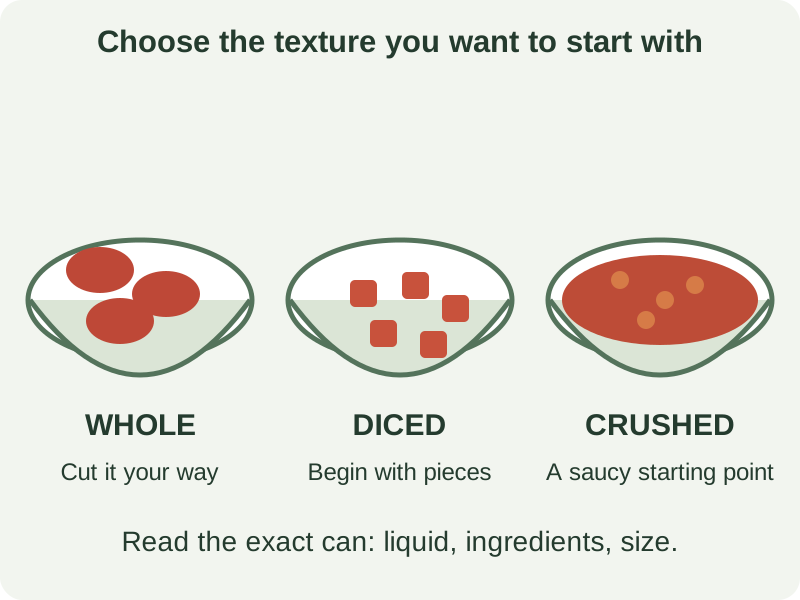
Pick a starting texture, then check the ingredients and the can size.
Read the guide
Tomato paste and tomato sauce solve different jobs in a recipe. Start with the exact ingredient named in the method, because a small concentrated paste can is not simply a bargain version of a larger sauce can.
Read the guide
When you see a damaged can on a store shelf, check the container before the price. You do not need to buy a questionable package simply because the food inside would fit tonight's recipe.
Read the guide
Tomato can sizes are easy to underestimate when a recipe says one can without naming the amount. Check the recipe's intended net quantity and tomato form before you decide how many cans belong in the cart.
Read the guide
Brown, green, and red lentils are useful shopping names, but the recipe's texture goal is the better starting point. Ask whether you want distinct lentils in the finished dish or a softer mixture that becomes part of its body.
Read the guide
Sorting and rinsing dry lentils are straightforward when you set up the task before starting. Read the current package directions, identify the type, and choose tools that keep the small pieces where you can see them.
Read the guide
Dry legumes are easier to buy sensibly when you begin with actual meals and their dry ingredient amounts. A large bag is useful only when you can connect it with food you realistically expect to cook.
Read the guide
A jar called natural peanut butter is not automatically a product that needs stirring, and a no-stir product is not automatically unsuitable for your recipe. Read the exact ingredients, handling directions, and recipe requirement before choosing between jars.
Read the guide
A peanut-butter jar's unopened date and its after-opening directions answer different questions. Read the actual storage instruction before deciding whether the opened jar belongs in your pantry or refrigerator.
Read the guide
Broth, stock, and concentrated base are easier to compare when you separate product name from preparation format. A carton you can measure directly and a base you dilute are different starting points, even if both can contribute to a soup.
Read the guide
If a recipe uses only part of a broth carton, decide what will happen to the rest before you open it. Begin with the exact product's after-opening directions and the amount the recipe actually needs.
Read the guide