All-Purpose vs. Bread Flour: Match the Flour to the Job
Match the flour to the recipe before changing the bag or the liquid.
In this guide
If your recipe names bread flour, buy bread flour when you can. If it calls for all-purpose flour, you usually gain more by following that instruction carefully than by choosing a bag that sounds stronger or more specialized.
The difference matters because a recipe is a set of connected choices. Flour, liquid, mixing, and the finished texture belong together; changing one ingredient can change the dough you are expecting to handle.
Begin with the recipe you want to make
Before comparing bags, read the ingredient line and the method. A recipe developed for a soft cookie asks something different of flour than a wet, slowly fermented bread dough does.
Make your shopping note specific enough to preserve that intention. “Unbleached all-purpose flour” is more useful than “flour,” and it prevents a hurried switch to self-rising flour or a different baking blend.
If you are following a recipe from a flour manufacturer, check which product it names. That information gives you a clearer starting point than assuming every flour carrying a similar front-panel label behaves identically.
You do not need a cupboard full of specialty bags to begin baking. Start with the flour used in the recipes you repeat, and add another type when an actual baking task calls for it.
Protein helps explain the distinction
Bread flour generally has more protein than all-purpose flour, which affects the gluten network formed when wheat flour is mixed with water. King Arthur's explanation connects that difference with dough strength and water absorption.
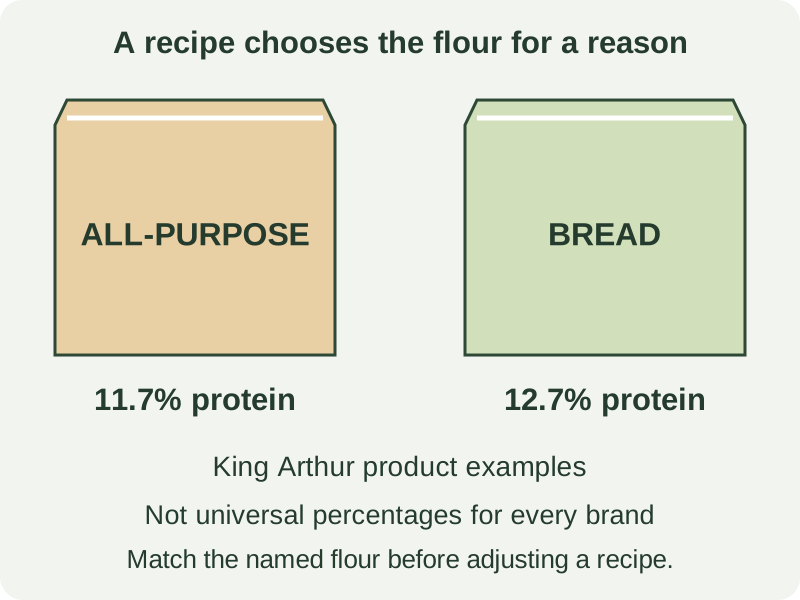
Its stated figures are 11.7% for its all-purpose flour and 12.7% for its bread flour. Treat those as product-specific examples, not a universal definition that applies to every brand or every type of wheat flour.
A percentage is useful context, not a score for how good a bag is. A recipe seeking a tender result and one seeking a strong bread dough can have different reasons for choosing their flour.
Do not estimate a precise baking protein percentage by dividing rounded Nutrition Facts numbers and assume it replaces a manufacturer's specification. If that detail matters to a demanding recipe, seek a published specification for the exact flour.
Illustration: swipe left or right, or focus the diagram and use the arrow keys, to see every label.
All-purpose does not mean identical
The name describes a broadly useful category, not one formula shared by all mills. Package information can differ in wheat type, enrichment, bleaching, certification, and the maker's stated intended uses.
For instance, White Lily identifies its all-purpose flour as soft winter wheat. King Arthur's standard all-purpose product identifies a different product specification; choosing between them should follow your recipe and preferences rather than the name alone.
This matters when a recipe writer calls out a particular flour. If you change brands and the result changes, the explanation may involve the ingredient as well as your measuring, mixing, or oven behavior.
Keep that possibility in perspective. It is a reason to make a clear note, not a reason to blame every flat cookie or sticky dough on the bag without checking the rest of the recipe.
Give a new recipe one dependable baseline
The first time you make a recipe, keep the named flour and ingredient amounts as close to the directions as you can. You will have a better reference for deciding what to change on a later attempt.
If you can buy only one flour today, choose a recipe written for that flour. Finding a suitable all-purpose loaf recipe is often a more straightforward project than improvising around a bread-flour recipe with a different bag.
This is especially helpful when the recipe involves an unfamiliar technique. Learning how the dough should look and feel is easier when you are not also guessing how a flour substitution changed its behavior.
Write down the exact flour name beside your baking notes. A brief note about the product and quantity can save you from trying to remember which nearly identical bag you opened last month.


When you are considering a substitution
Sometimes you are already mixing and discover that the intended bag is empty. Pause before pouring in the replacement, and look for substitution advice from the recipe's author or the flour maker.
The useful answer includes the particular recipe, not just a statement that two flours can replace one another. The same swap may be acceptable for one loaf and frustrating in another recipe with a very different amount of liquid.
King Arthur's flour comparison describes why a change can affect water absorption and dough handling. It does not establish one adjustment that you should apply blindly to every bread recipe.
If you decide to experiment, change one thing and keep the batch manageable. A small trial gives you a clearer lesson than replacing the flour, changing the liquid, and doubling the recipe at the same time.
Do not promise yourself that the substitute will reproduce the original exactly. Decide what you are willing to accept: perhaps a usable loaf with a different texture is fine for tonight, while a celebration bake deserves another shopping trip.
Measure the flour the way the recipe expects
Check whether the recipe gives weight, volume, or both. When a weight is supplied, a scale can help you follow that amount without making assumptions about how tightly the flour sits in a cup.
If you use cups, follow the author's measuring method. Scooping, spooning, and packing are different actions; changing the method while keeping the cup count the same can complicate your comparison.
Gold Medal's product directions describe spooning flour into a dry measuring cup and leveling it. That is a specific maker's instruction, not permission to ignore a different recipe's stated technique.
Keep your measurement notes concrete. “Used the recipe's gram amount” or “spooned and leveled the cups” tells you more on your next attempt than a vague note that the dough seemed dry.
Do not confuse the other labels
Self-rising flour includes ingredients beyond plain flour, so it is not the same purchase as an all-purpose bag. Check the ingredient list instead of expecting a different name to be a harmless packaging variation.
Whole-wheat flour, gluten-free flour blends, and pizza-specific products also deserve their own recipe instructions. This comparison concerns conventional wheat all-purpose and bread flours; it is not a substitution chart for every bag in the baking aisle.
Organic and unbleached describe other characteristics of the product. Neither word, on its own, tells you that the flour is the right match for a bread-flour recipe or that it can replace a gluten-free blend.
Use the front of the bag to identify the product, then read the back for ingredients, handling instructions, and any more specific information. Marketing words should not have to do the work of the entire label.
Choose a package you will use
Once you know the flour type, consider quantity. A larger bag creates no advantage if you rarely make the recipes it serves or have nowhere appropriate to keep the opened package.
Compare prices on a common weight basis, and include any storage container you genuinely need in your decision. You can read our unit-price guide before choosing a multipack just because its front price looks attractive.
Keep the original directions and identification available if you decant the flour. Marking the container with the exact product prevents an accidental all-purpose/bread-flour mix-up when several white powders share a shelf.
Finally, remember that flour is a raw ingredient: the FDA advises against tasting raw flour, dough, or batter. Choose the right bag, follow the recipe's cooking directions, and make your next adjustment from clear notes rather than a guess.
Sources & product information
Relevant pages checked October 28–29, 2026. Product information is the maker’s or retailer’s description; the practical examples and choices are Shelf Savvy editorial guidance.