Best Subwoofers for Cheap: Big Bass on a Budget
In this guide
Looking for affordable subwoofers that still deliver solid bass and clear sound? This guide highlights five cost-conscious options that suit different setups, from home theater to music production. Whether you want compact wireless bass for a TV speakers setup or a wired sub for a car or studio, there are budget-friendly picks here. This article targets buyers who want strong low end without overspending, and it explains who each product is best for and why it was selected.
Summary table of selected products
| Product | Best For | Key Benefit | Notes |
|---|---|---|---|
| Sonos Sub 4 | Home theater fans with Sonos ecosystem | Powerful wireless bass with dual drivers | Great expansion with Arc/Beam |
| Sonos Sub Mini | Compact setups with Beam or Ray | Deep bass from a small cabinet | Inward-facing woofers reduce distortion |
| Amazon Echo Sub | Echo-centric rooms | Deep bass with Echo pairing | Best when used with compatible Echo devices |
| PreSonus Eris Sub 8BT | Home studios and multimedia | 8″ woofer with Bluetooth | Studio-grade accuracy in a budget |
| CT Sounds Bio 10” | Car audio on a budget | Strong RMS/Peak power for the price | Best for car bass enthusiasts |
Sonos Sub 4 – Wireless Subwoofer

The Sonos Sub 4 uses dual Sonos-engineered drivers to deliver deep, dynamic bass in a compact wireless form. Its ported enclosure enhances low-frequency output, making it a strong choice for viewers and gamers who want room-filling low end without a large footprint. Best for owners already using a Sonos ecosystem such as Arc, Ultra, or Beam to expand bass in a living room or media room. A potential limitation is that the Sub 4 works most effectively when used with compatible Sonos speakers to unlock its full bass capabilities.
Sonos Sub Mini – Black

The Sub Mini brings significant bass in a compact cabinet, ideal for small living rooms or apartments. It pairs well with Beam or Ray, delivering immersive depth for movies, games, and music. Its inward-facing dual woofers help minimize distortion, producing a full sound without dominating space. Choose this if you need real bass impact without a large unit; avoid this if you require extremely loud room-filling bass in a large living space without upgrading other speakers.
Amazon Echo Sub
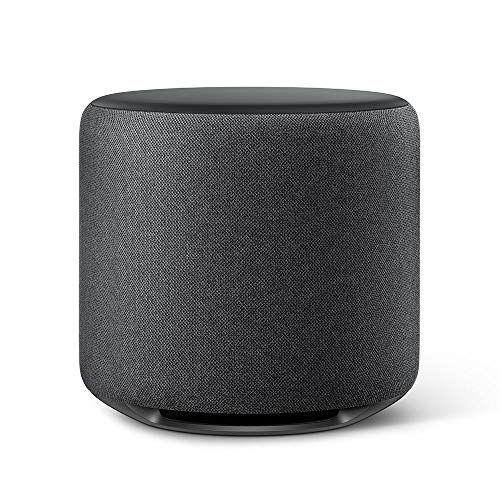
The Echo Sub provides down-firing bass via a 6″ woofer, designed to pair with a compatible Echo device for a more immersive audio experience. It is best for buyers who want to enhance smart speakers in a room, gaining dynamic music and richer TV audio when used with the right Echo setup. A limitation is that true stereo depth is achieved best with two compatible Echo devices, otherwise bass is enhanced but not spatially separated left/right.
PreSonus Eris Sub 8BT

The Eris Sub 8BT is an 8″ powered subwoofer designed for studio accuracy and home theater listening. It supports Bluetooth for wireless connections and delivers a deep low end down to 30 Hz, making it well-suited for music production, hi-fi listening, and multimedia use. It’s a good pick for budget-conscious buyers seeking precise bass in a compact form. Note that wireless latency may vary with Bluetooth connections, and wired use offers more stable low-end performance.
Buying Guide: Key Considerations For Choosing A Budget Subwoofer
What room size will the sub serve? Larger rooms require greater bass output and more capable subwoofers, while small spaces can benefit from compact designs like the Sub Mini. If you’re building a home theater around a soundbar or a few speakers, wireless options that integrate with existing ecosystems can simplify setup and cable management.
Wired vs wireless. A wireless sub is convenient but may introduce latency or compression if used with older receivers. For bass precision and studio use, a wired sub with a dedicated LFE input often provides the most reliable performance.
Power and frequency range matter. Look for RMS power and the ability to reproduce low frequencies that match your listening goals. Budget subs can still reach the low end, but expectations should align with room acoustics and speaker pairing.
Compatibility and expansion. If you already own devices from a brand family (Sonos, Echo, etc.), consider a sub that plays well within that ecosystem to maximize features like room calibration, stereo pairing, and voice control integration.
Usage scenario. For home theaters, prioritize bass that enhances film effects without overpowering dialogue. For music and gaming, prioritize tight, accurate bass that complements the mix. For car audio, consider vehicle installation constraints and impedance matching.
Frequently Asked Buying Questions
- Do budget subwoofers sound as good as premium models? Budget subs can deliver strong bass and enjoyable listening experiences, especially in small to medium rooms, but may lack the depth, dynamic range, or feature set of higher-end models. They are best for solid performance without premium price.
- Is a wireless sub worth it for a TV setup? A wireless sub reduces wiring complexity and can still deliver powerful bass, but ensure your receiver supports reliable wireless transmission or uses a stable network. For cinema-like bass, wired connections may yield more consistent results.
- Should I choose a compact sub or a larger one? Choose a compact sub for limited space and lighter room load, and a larger sub for deeper bass and greater room impact. Your choice should align with room size and listening goals.
- Can I use a sub with a non-brand speaker system? Yes, many budget subs are versatile and can pair with various brands. Check impedance, input types (LFE, line in), and whether the sub’s phase control helps integrate with your existing speakers.
- Is Bluetooth on a subwoofer necessary? Bluetooth is useful for quick wireless connections, especially with studio or multimedia setups, but wired connections generally provide more reliable, latency-free bass for critical listening.
- What’s the best way to calibrate a budget sub? Start with a modest bass level, set phase to 0 or 180 as needed, and use bass management settings in your receiver to align with your main speakers. Walk around the listening area to check even bass distribution.