Best Green Moong Dal Split: Top Five Splits for Everyday Indian Cooking
In this guide
- Organic Moong Dal Split (Chilka) 2 LB by Jiva Organics
- Rani Moong Split (With Skin) 32oz by Rani Brand
- Jai Ho Certified Organic Moong Mung Split Dal with Skin
- Darsa Organics Mung Split Lentils with Skin
- Organic Tattva Moong Dal (4 lbs) – Split Mung Beans
- Buying Guide: What To Consider When Choosing Green Moong Dal Split
- Frequently Asked Questions
Green moong dal split, with its skin intact, offers a wholesome, protein-packed option for dal, curries, and salads. This article highlights five reliable, organic or natural options that balance nutrition, flavor, and cookability. It’s ideal for vegetarians, vegans, and anyone seeking gluten-free, plant-based protein. The top picks are best for cooks who want earthy depth, quick soaking, and dependable results in everyday Indian dishes. The following table provides quick references to each product’s brand, key strength, and suitability.
| Product | Brand | Best For |
|---|---|---|
| Organic Moong Dal Split (Chilka) 2 LB | Jiva Organics | Everyday dal and curries; high protein and fiber |
| Rani Moong Split (Skin) 32oz | Rani Brand Authentic Indian Products | Vegetarian and vegan recipes; natural protein source |
| Jai Ho Certified Organic Moong Mung Split Dal with Skin | Jai Ho | Stir-fries, curries, grain bowls; organic and pure |
| Darsa Organics Mung Split Lentils with Skin | Darsa Organics | Certified organic, additive-free option with rich nutrition |
| Organic Tattva Moong Dal (4 lbs) – Split Mung Beans | ORGANIC TATTVA | Daily protein source; versatile for soups and dals |
Organic Moong Dal Split (Chilka) 2 LB by Jiva Organics

Jiva Organics Moong Dal Split with skin is a premium organic option rich in plant-based protein and fiber. The Chilka variety is known for its earthy flavor and wholesome texture, making it ideal for traditional dal preparations and hearty curries. This product is Non-GMO, gluten-free, and free from additives. Best for cooks who prioritize organic ingredients and minimally processed legumes, especially in everyday meals or family favorites. A potential limitation is that split dals with skin may require longer soaking or longer simmering to achieve the desired softness depending on cooking method.
Rani Moong Split (With Skin) 32oz by Rani Brand

Rani Moong Split with skin offers a natural, all-natural protein source well-suited for vegetarians and vegans. The product is marketed as Kosher and free of preservatives or fillers, aligning with clean-label preferences. It’s a strong option for those seeking a traditional split mung bean with skin for dals or khichdi. A caution: the description emphasizes health benefits but does not specify organic certification, so check for organic sourcing if that is a priority.
Jai Ho Certified Organic Moong Mung Split Dal with Skin
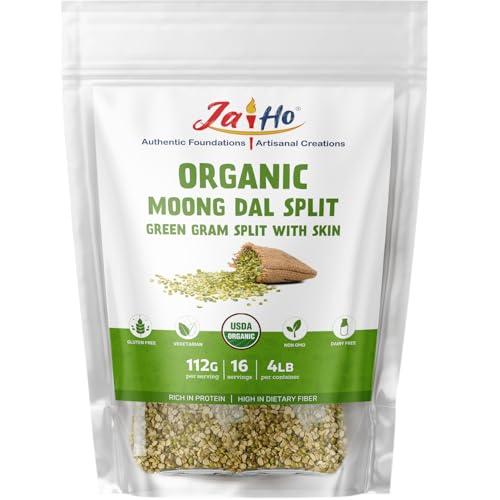
Jai Ho Moong Mung Split Dal with skin is certified organic and non-GMO, designed for clean and pure ingredient use in curries, stir-fries, and grain-based salads. The product emphasizes careful handpicking and packaging to preserve quality. It’s a solid choice for cooks who prefer a chemical-free option and Kosher-certified ingredients. A limitation: product detail highlights general usage rather than specific cooking times, so plan for standard dal preparation to achieve tenderness.
Darsa Organics Mung Split Lentils with Skin

Darsa Organics offers a USDA Organic, non-GMO Moong Dal Split with Skin, labeled Kosher and additive-free. This option is nutrient-dense, high in protein, fiber, potassium, and iron, making it suitable for a balanced vegetarian or vegan diet. It’s best for buyers seeking a sustainably sourced option with a clear organic certification. A potential drawback is that some users may require longer cooking times to reach desired softness if not pre-soaked.
Organic Tattva Moong Dal (4 lbs) – Split Mung Beans

Organic Tattva Moong Dal is USDA Organic, gluten-free, vegan, kosher, and non-GMO, designed for everyday meals. The unpolished, minimal-processing mung beans offer a straightforward pathway to dal, soups, or salads. This option is well-suited for cooks who value simple, clean ingredients and reliable protein. A note: the focus is on dietary quality; cooking times will vary by method and soaking.
Buying Guide: What To Consider When Choosing Green Moong Dal Split
- Plant-based protein needs: If you prioritize higher protein per serving, look for brands that emphasize protein density in their product descriptions.
- Organic certification: Choose USDA Organic when avoiding pesticides and synthetic chemicals is important; check for non-GMO labels if preferred.
- Skin on vs. skinless: Dals with skin (chilka) add texture and flavor but may require longer cooking times; skinless options often cook faster and have a milder texture.
- Allergen considerations: For gluten-free diets, confirm gluten-free processing; most mung dal is naturally gluten-free but cross-contamination can occur in facilities.
- Culinary use: For everyday dal, choose a product noted for ease of cooking and consistent texture. For curries and salads, select a variety that holds shape well after simmering.
- Certification and authenticity: Kosher, vegan, and organic certifications can help meet specific dietary or ethical requirements.
- Storage and freshness: Look for sealed packaging with clear expiration or packaging date to ensure freshness on long-term storage.
Frequently Asked Questions
- What is green moong dal split with skin good for?
It adds protein and fiber to meals, and its earthy flavor works well in dals, curries, and salads.
- Should I soak moong dal before cooking?
Soaking can reduce cooking time; however, split moong dal with skin often cooks relatively quickly compared to other legumes.
- Is moong dal gluten-free?
Yes, moong dal is naturally gluten-free, but confirm processing and packaging to avoid cross-contamination.
- Which moong dal is best for organics?
For strict organic sourcing, choose products labeled USDA Organic and non-GMO where available.
- What recipes suit moong dal with skin?
Traditional dal, khichdi, curries with vegetables, and hearty soups are common uses.
- Can moong dal replace other dals in recipes?
Yes, you can substitute moong dal in many dal-based recipes, adjusting cooking times as needed.