Best Food Safe Sanitizing Solutions for Commercial Kitchens and Food Surfaces
In this guide
- Steramine Sanitizing Tablets – 150 Count
- LEXX RTU Food Contact Surface Sanitizer & Cleaner (Liquid)
- LEXX RTU Food Contact Surface Sanitizer & Cleaner Spray
- PURELL Foodservice Surface Sanitizer (Fragrance Free, 1 Gal Refill Pack)
- Diversey J-512 Sanitizer (32 oz, AccuMix)
- Buying Guide: Key Purchase Considerations
- FAQ
Finding a reliable, food-safe sanitizing solution is essential for restaurants, cafes, caterers, and other food-service operations. This guide highlights five top options that are widely used in professional settings, focusing on sanitizing tablets, ready-to-use liquids and sprays, and no-rinse formulas. Each product is described with who it’s best for, why it’s chosen, and any practical limitations. This article is aimed at buyers seeking compliant, effective solutions for food-contact surfaces, utensils, and high-touch areas.
| Product | Best For | Why It Stands Out | Notes |
|---|---|---|---|
| Steramine Sanitizing Tablets (150 Count) | High-volume kitchens, catering, healthcare facilities | Economical, dissolves in water to a calibrated sanitizing solution | Blue tint confirms concentration |
| LEXX RTU Food Contact Surface Sanitizer & Cleaner (Liquid) | No-rinse sanitizing in busy areas | EPA-registered, NSF-listed, no residue | Natural ingredients, citric-acid powered |
| LEXX RTU Food Contact Surface Sanitizer & Cleaner Spray | Quick spot sanitizing on non-porous surfaces | No rinse required, easy spray format | Gentle, eco-friendly formulation |
| PURELL Foodservice Surface Sanitizer, Fragrance Free (4-Pack) | Food-contact surfaces with fast disinfection | Kills a broad spectrum quickly, no rinse | Fragrance-free option |
| Diversey J-512 Sanitizer (32 oz, AccuMix) | Utensil and dish sanitation in commercial sinks | No-rinse final-step sanitizer, approved for food-contact surfaces | Kosher, NSF Certified |
Steramine Sanitizing Tablets – 150 Count
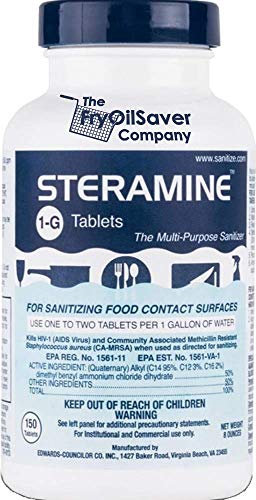
Best for high-traffic commercial kitchens, bars, and catering operations. These tablets dissolve in water to produce a dependable sanitizing solution for food-contact surfaces, utensils, and equipment. The large 150-count bottle supports daily sanitation across busy services.
Why selected: Economical for frequent sanitizing in professional settings; helps maintain health-department compliance with standardized concentration. Suitable for sanitizing countertops, cutting boards, and kitchen gear. This product is ideal when many surfaces require routine sanitation.
Limitation: Requires proper mixing to achieve the recommended strength; a ready-to-use solution must be prepared and stored appropriately to maintain efficacy.
LEXX RTU Food Contact Surface Sanitizer & Cleaner (Liquid)

Best for facilities needing a no-rinse, high-safety option with natural ingredients. This EPA-registered and NSF-listed sanitizer is designed for food-contact areas and leaves no harmful residue after use.
Why selected: No rinsing required makes it especially suitable for busy food-prep zones where downtime is costly. The natural formulation supports a safer environmental profile while delivering rapid sanitizing action against common pathogens.
Limitation: Some users may prefer non-citric formulations in highly sensitive equipment; ensure compatibility with all hard, non-porous surfaces used in your operation.
LEXX RTU Food Contact Surface Sanitizer & Cleaner Spray

Best for quick sanitizing in open-kitchen layouts or service lines. This spray format allows targeted application on non-porous surfaces, fixtures, and equipment that require fast disinfection without rinsing.
Why selected: Provides a convenient, no-rinse sanitizing option with a gentle, natural-ingredient formulation. Suitable for touchpoints and surfaces that need quick turnover between uses.
Limitation: Spray bottles require careful handling to avoid over-coverage or drips on food-contact zones; maintain recommended contact time for effectiveness.
PURELL Foodservice Surface Sanitizer (Fragrance Free, 1 Gal Refill Pack)

Best for hospitals, schools, and restaurants seeking a fragrance-free, fast-acting sanitizer for food-contact surfaces. It provides broad-spectrum disinfection with minimal downtime and no rinse required.
Why selected: The fragrance-free formula is ideal for sensitive environments and diners with fragrance concerns. The no-rinse requirement supports efficient workflow in service lines and prep areas.
Limitation: While fragrance-free, it may require precise measurement and timing to ensure consistent sanitization across multiple surfaces.
Diversey J-512 Sanitizer (32 oz, AccuMix)

Best for final-step sanitation of utensils and dishes in commercial sinks. This no-rinse sanitizer is designed to be used as part of a dishwashing process for reliable food-contact surface hygiene.
Why selected: EPA-registered and NSF-certified status support compliance in busy dishwashing workflows. AccuMix concentration helps standardize use across operations.
Limitation: Requires correct dilution and adherence to sink-based usage instructions to maintain efficacy and avoid residue buildup on items in storage.)
Buying Guide: Key Purchase Considerations
- No-Rinse Convenience: For fast-paced kitchens, no-rinse formulas save time and improve turnover. Look for products labeled No Rinse or for those designed specifically for food-contact surfaces.
- Regulatory Status: Check EPA registration and NSF listing, particularly for products used on food-contact surfaces and in commercial kitchens.
- Food-Safe Formulations: Prefer sanitizers with natural or citron-based ingredients when possible and ensure compatibility with your surfaces (stainless steel, plastic, wood, etc.).
- Concentration and Coverage: Tablets and concentrates should be easy to scale to your volume. Confirm yield per bottle or tablet to estimate annual usage.
- Application Method: Consider the most efficient format for your operation—tablets, liquids, or sprays—and how it fits with your workflow and storage space.
- Surface Type and Temperature: Some sanitizers perform better in cold or room-temperature water; ensure the product suits your typical operating conditions.
- Fragrance and Residue: If guests are sensitive to smells or you need residue-free surfaces, choose fragrance-free or low-residue formulas and test on a small area first.
- Storage and Handling: Store away from heat, moisture, and incompatible chemicals. Keep out of reach of food prep zones when storing chemical concentrates.
FAQ
- What is the main difference between tablets and ready-to-use sanitizers?
Answer: Tablets create a sanitizing solution when dissolved in water, while ready-to-use products are pre-mixed and ready for application, saving prep time. - Do these products require rinsing on food-contact surfaces?
Answer: Many modern formulas are no-rinse and designed for food-contact surfaces, but always follow label directions. - Are these sanitizers approved for use in healthcare settings?
Answer: Several options carry EPA registration and NSF listing, which supports use in professional environments, including some healthcare settings. - How do I determine the right concentration for sanitation?
Answer: Refer to product labels for dilution guidance, typically shown as water-to-tablet or water-to-concentrate ratios, and monitor with provided test strips if included. - What surfaces can I sanitize with these products?
Answer: Most are suitable for hard, nonporous food-contact surfaces like countertops, cutting boards, stainless steel, utensils, and equipment, but verify surface compatibility on the label. - Is fragrance-free better for dining environments?
Answer: Fragrance-free formulas reduce potential sensory impact on guests and are preferred in many dining and healthcare environments.