Best Bulk Raw Peanuts in Shell for Wildlife Feeding
In this guide
Answering the question: bulk raw peanuts in shell are best for wildlife feeders, birds, and small mammals seeking a high-protein, energy-rich snack. This guide compares five top options to help outdoor enthusiasts choose the right feed for their yard or property. The best choice depends on how you feed wildlife, the size of your feeding area, and whether you prefer USA-grown, unsalted peanuts. The table below highlights key details for quick comparison.
| Product | |||
|---|---|---|---|
| Wildlife Elements Peanut Party | 25 lb | Birds, Squirrels, Waterfowl | |
| Trailmark Naturals – 25 lb | 25 lb | Daily squirrel feeding, backyard birds | |
| CountryMax in-Shell Raw Peanuts | 25 lb | Ground feeding, wildlife observation | |
| Wakefield Premium Virginia Peanuts | 25 lb | Birds, numerous wildlife | |
| Trailmark Naturals – 2 Pack 5 lb Bags | Total 10 lb | Squirrels, wild birds |
Wildlife Elements Peanut Party Unprocessed Peanuts

Best for: Bird lovers, squirrels, and wildlife watchers who want a USA-grown, fresh raw in-shell peanut option. This product is farmer stock, not for human consumption, and is sourced in North Carolina to support local agriculture. It is raw and free from additives, offering natural protein and healthy fats for wildlife year-round. Caution: not intended for human consumption.
Selected because it combines local sourcing with a broad wildlife appeal. This option is ideal for feeders that attract a variety of visitors, including woodpeckers, blue jays, cardinals, squirrels, and waterfowl. The lack of processing helps preserve natural nutrients, though some buyers may prefer human-grade oversight or different packaging.
Trailmark Naturals 25 lb Raw Peanuts
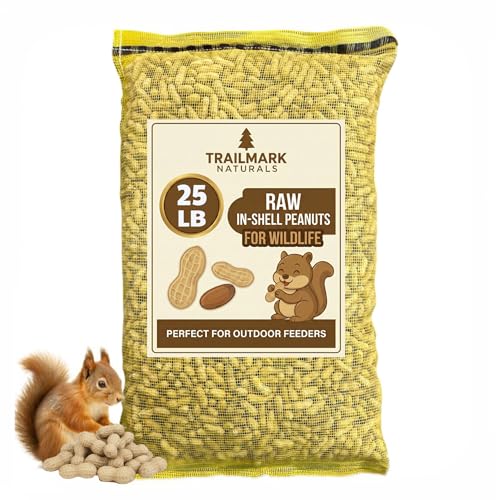
Best for: Backyard feeders and wildlife enthusiasts who want a simple, large-volume option. These USDA-raw, unsalted in-shell peanuts are grown in the USA and are suitable for daily wildlife feeding, including squirrels and wild birds like blue jays and woodpeckers.
Why chosen: The 25 lb bag offers straightforward bulk feeding with clean, natural nutrition. A potential limitation is the lack of human-grade labeling, so it’s best used strictly for wildlife consumption as intended.
CountryMax In-Shell Raw Peanuts 25 lb

Best for: Wildlife-friendly yards that want a bulk, natural option to encourage cracking and foraging behaviors. This product is natural, unsalted, and USA-grown, making it a reliable choice for year-round wildlife feeding.
Why chosen: The included features emphasize energy and nutrition with sustained calories for wildlife during colder months. Limitation: no explicit mention of human-grade usage; treat as wildlife feed only.
Wakefield Premium Virginia Peanuts In-Shell 25 lb

Best for: A traditional, high-protein wildlife snack that attracts a wide array of birds and mammals, including blue jays and squirrels. These are hand-picked and bulk packaged for year-round feeding.
Why chosen: The product is described as raw, unsalted, and high-protein with essential fatty acids. It is a recognized option for bird and wildlife watchers, though buyers should roast or boil before human consumption and store properly to maintain quality.
Trailmark Naturals 2 Pack Of 5 Lb Bags

Best for: Small to mid-size outdoor feeding setups where a steady supply is needed without a long-term commitment to one large bag. The 2-pack provides flexibility for rotation or staged feeding.
Why chosen: These are premium raw peanuts in shell, USA-grown, unsalted, and unroasted for natural nutrition. Limitation: still requires rodent- and wildlife-specific storage to prevent pest issues.
Buying Guide
What to look for when buying bulk raw peanuts in shell:
- Source and purity: USA-grown, unsalted, and free from additives support natural wildlife nutrition and cleaner feeding areas.
- Size and packaging: Larger bags reduce reordering frequency; consider a mix of sizes to suit feeding space and wildlife visits.
- Intended use: Confirm the product is for wildlife feeding and not intended for human consumption, unless explicitly labeled human-grade.
- Storage: Cool, dry storage helps maintain freshness; some products may require refrigeration for longer-term storage.
- Diversity: Using multiple brands or sizes can help attract a wider range of wildlife and prevent over-reliance on a single species.
How to Use And Maximize Attractiveness
- Scatter peanuts in shell on the ground or place in wildlife feeders designed for in-shell nuts.
- Provide a shallow tray or platform feeder to reduce scattering and waste.
- Rotate between different brands to mimic natural foraging conditions and maintain wildlife interest.
FAQ
- Are raw peanuts in shell safe for wildlife all year? Yes. They provide protein and healthy fats, but should be offered in moderation to avoid overfeeding.
- Should I soak or roast in-shell peanuts before feeding? For wildlife feeding, peanuts can be fed raw. Roasting or boiling is primarily for human consumption and flavor enhancement.
- Can I feed peanuts to any wildlife? Most birds, squirrels, chipmunks, and other small mammals will eat in-shell peanuts, but always monitor local wildlife behavior and avoid attracting pests in excess.
- Is there a risk of mold or spoilage? Store in a cool, dry place. If you notice off smells or moisture, discard affected peanuts to prevent health issues for wildlife.
- Can these be used in bird feeders? Yes, especially feeders designed to hold in-shell nuts. They’re a common choice for supplementing energy-rich diets.